
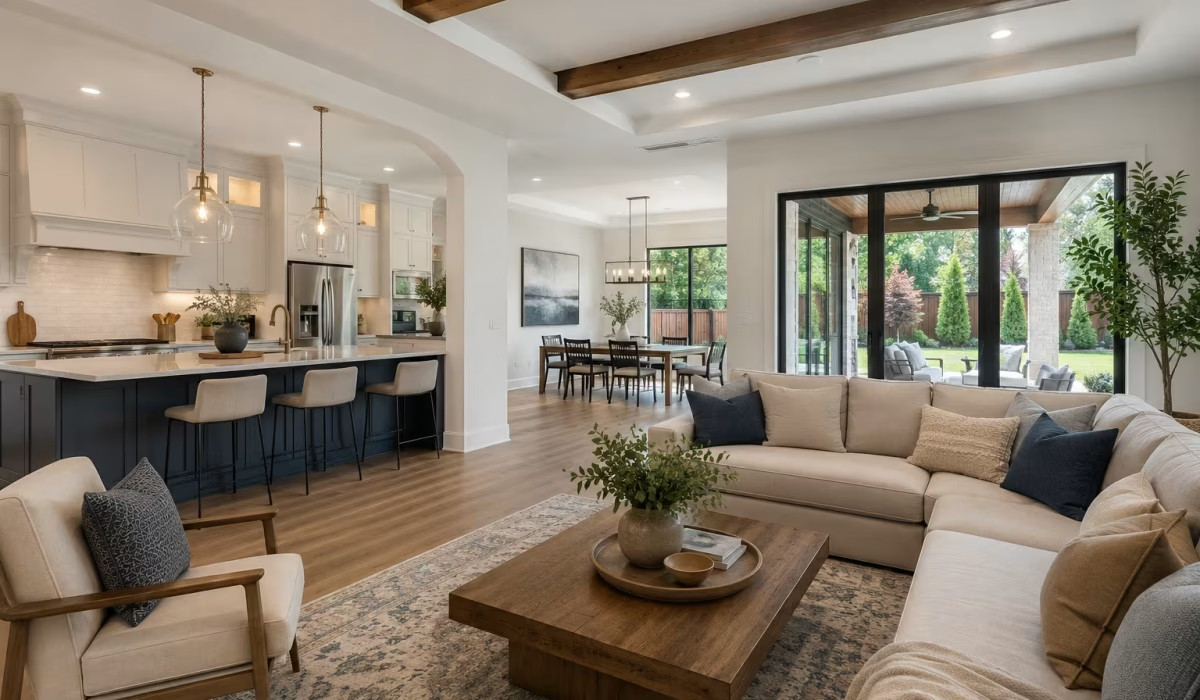
Plan a Home Remodel in Richardson, TX: A Complete 2026 Guide
Richardson, Texas is one of the most desirable communities, and with steady population growth, rising home values, and a housing stock that ranges from mid-century ranch homes to newer planned-community builds, more homeowners here are investing in remodeling rather than relocating. Whether you're updating a 1970s split-level near Arapaho Road, modernizing a kitchen in the Heights neighborhood, or adding a master suite to a Canyon Creek home, a well-planned remodel can significantly raise your quality of life and your property's market value.
But remodeling is rarely simple. It involves permits, contractors, timelines, budgets, design decisions, and unexpected surprises hiding behind drywall.
What Is a Home Remodeling Checklist?
A home remodeling checklist is your roadmap from idea to finished project. Without one, it's easy to overlook critical steps, blow past your budget, or end up in a dispute with a contractor. Think of it as a living document, one that evolves as your project takes shape.
Here's a comprehensive checklist to guide your remodel in Richardson:
Before You Begin
- Define the scope of your project clearly (cosmetic updates vs. structural changes)
- Set a realistic budget with a 15–20% contingency buffer for surprises
- Research local zoning regulations and HOA rules (many Richardson neighborhoods have active HOAs)
- Check whether your project requires a permit through the City of Richardson's Development Services department
- Interview at least three licensed contractors and request itemized bids
- Verify contractor licenses through the Texas Department of Licensing and Regulation (TDLR)
- Confirm contractor carries general liability insurance and workers' compensation
- Review and sign a detailed written contract before any work begins
During the Remodel
- Establish a communication schedule with your contractor (daily check-ins or weekly summaries)
- Document everything, take photos before, during, and after each phase
- Keep a change-order log; every modification to the original scope should be in writing with a price attached
- Arrange for permit inspections at the required milestones
- Protect unaffected parts of your home from dust and damage
- Secure valuables and keep pets and children away from work zones
Project Completion
- Conduct a thorough walkthrough before making your final payment
- Create a punch list of incomplete or substandard items and confirm they will be addressed
- Obtain all signed-off permits and inspection records
- Collect warranties for materials, fixtures, and labor
- Request as-built drawings if any structural or mechanical work was done
- Update your homeowner's insurance policy to reflect the increased value
Having this checklist in hand before you pick up the phone to call a contractor puts you in a position of knowledge and authority, two things that protect your investment.
How Do You Prepare Your Home for a Remodel?
Preparation is one of the most underestimated phases of any remodel. How well you prepare your home, and your household, directly affects how smoothly the project goes.
Declutter the Work Area
Before contractors arrive, remove furniture, wall art, rugs, and personal items from rooms that will be affected. Even projects in adjacent rooms generate significant dust. Box up fragile items, breakables, and anything irreplaceable.
Protect What Stays Behind
Cover HVAC vents to prevent dust from cycling through your system. Lay protective film over hardwood floors in pathways. Use plastic sheeting to seal off doorways between the work zone and the rest of your living space. If your HVAC system is older, consider having filters replaced before and after the remodel.
Set Up a Temporary Living Space
If your kitchen is being gutted, set up a mini-kitchen elsewhere, a microwave, electric skillet, and a small refrigerator in the dining room or garage can sustain a family for weeks. If a bathroom is out of commission, confirm which bathroom will serve as the household primary and stock it accordingly.
Notify Your Neighbors
Richardson has established neighborhoods with close-knit communities. It's courteous, and sometimes practically necessary, to let neighbors know that construction noise, dumpsters, and contractor vehicles will be present. Depending on your HOA, you may also be required to submit plans for exterior changes for approval before work begins.
Secure Valuables and Sensitive Documents
During a remodel, many different workers will pass through your home. Store jewelry, cash, financial documents, medications, and firearms in a locked safe or remove them from the home entirely.
Map Out Utility Locations
Before any walls are opened or floors are torn up, document the location of electrical panels, shutoff valves, and gas lines. Your contractor should have this information, but you should know it independently.
Create a Paper Trail
Start a dedicated folder, physical or digital, for your project. Keep copies of your contract, permits, material receipts, change orders, and all contractor communication in one place. This protects you if a dispute arises.
When Should You Move Out During a Home Remodel?
This is one of the most common questions Richardson homeowners face, and the honest answer is: it depends on the scope of your project.
Projects That Usually Don't Require Vacating
Minor remodels, such as a bathroom update, a flooring replacement in one room, or a kitchen cabinet refresh, can usually be managed while you're living in the home. You'll deal with some noise and dust, but you can work around the construction schedule.
Projects That Often Do Require Temporary Relocation
Larger projects frequently make staying home impractical or unsafe:
- Full kitchen gut-and-rebuild:
Without a functional kitchen for four to eight weeks, meal preparation becomes a serious challenge, especially for families with young children.
- HVAC replacement or major duct work:
This can make your home unbearably hot in Richardson's summers, where July and August regularly see temperatures above 100°F. Working in a home without air conditioning is not realistic during those months.
- Whole-home or multi-room remodels:
If more than 40% of your home is under active construction, dust control becomes nearly impossible and safety concerns multiply.
- Structural work:
Foundation work, load-bearing wall removal, or roof replacement may require vacating the property during specific phases.
- Mold or asbestos remediation:
If your remodel uncovers hazardous materials, a real possibility in Richardson homes built before 1980, remediation protocols typically require residents to leave.
The Financial Reality of Moving Out
Short-term rentals in the Richardson/Plano corridor average $100–$175 per night for a comparable home, or roughly $2,500–$5,000 per month. Budget this into your overall project cost if there's any chance you'll need to vacate. Some homeowners stay with family or friends to minimize this expense.
A Middle-Ground Strategy
If your project is mid-sized, consider a phase-by-phase approach that keeps one functional zone of the home livable at all times. A skilled contractor can structure work to minimize disruption, renovating one half of the home while the other remains intact, then switching.
What Are the Home Remodeling Contract Red Flags You Should Never Ignore?
The contract is the single most important document in your remodeling project. A bad contract, or no contract at all, is the foundation of most remodeling horror stories. Here are the red flags to watch for before you sign anything in Richardson.
Red Flag #1: A Verbal Agreement
Any contractor who suggests skipping a written contract should be disqualified immediately. In Texas, a written contract is your legal protection. It defines scope, timeline, payment schedule, and what happens when things go wrong. "We'll work it out" is not a business arrangement, it's an invitation to a dispute.
Red Flag #2: Demanding Full Payment Upfront
Legitimate contractors do not ask for 100% payment before work begins. Standard payment structures in Texas typically involve a deposit (usually 10–30% of the total), progress payments tied to completion milestones, and a final payment upon satisfactory completion. Any contractor demanding full payment in advance is either financially unstable or planning to disappear.
Red Flag #3: Unusually Low Bids
If one bid is 30–40% lower than comparable bids, ask why. The explanation is usually one of three things: unlicensed labor, substandard materials, or a contractor who will underbid to win the job and then supplement with excessive change orders. In Richardson's current construction market, extremely low bids rarely end well for homeowners.
Red Flag #4: No License or Insurance Information
Texas contractors who perform work over certain thresholds must be licensed with TDLR. Ask to see the license number and verify it. Also request certificates of general liability insurance and workers' compensation. If a worker is injured on your property and the contractor carries no workers' comp, you may be liable.
Red Flag #5: Vague Scope of Work
A contract that says "remodel kitchen" without specifying materials, brands, dimensions, fixtures, and finishes gives a dishonest contractor enormous room to cut corners. Every material should be specified by name, model number, and grade. Every task should be described precisely.
Red Flag #6: No Permit Pulled
For any project requiring a permit in Richardson, and many do, including electrical work, structural changes, additions, and HVAC modifications, the contractor should be the one pulling the permit and managing inspections. If a contractor suggests skipping permits "to save money," say no. Unpermitted work can invalidate your homeowner's insurance, create problems when you sell, and leave you personally liable for code violations.
Red Flag #7: Pressure to Sign Immediately
High-pressure tactics, "this price is only good today" or "I have another client waiting", are manipulation tools. A reputable contractor will give you time to review a contract, compare bids, and ask questions.
Red Flag #8: No Clear Payment or Change Order Process
The contract should specify exactly how change orders work: in writing, signed by both parties, with price agreed upon before work proceeds. If the contract is silent on this, any verbal agreement about additions or modifications can be disputed later.
What Are the Top Signs You Need a Home Remodel in Richardson, TX?
Richardson homes span several decades of construction, from the postwar bungalows near the city center to mid-century ranch homes and 1980s–1990s tract developments in the outer neighborhoods. Knowing when your home is telling you it needs attention can save you from costly repairs down the road.
Sign #1: Your Home Is 20–30 Years Old Without Updates
Many of Richardson's most popular neighborhoods, Heights, Canyon Creek, Buckingham, are filled with homes built between the 1960s and 1990s. Original kitchens, bathrooms, windows, and mechanical systems from that era are often well past their functional prime. If your home has original appliances, single-pane windows, or a kitchen that hasn't been touched since Reagan was president, it's time.
Sign #2: Rising Utility Bills With No Obvious Cause
Texas summers are brutal, and Richardson homeowners know how punishing an inefficient home can be in July. If your energy bills are climbing without a corresponding change in habits, your insulation, windows, HVAC system, or building envelope may be failing. A remodel that addresses air sealing, insulation upgrades, and window replacement can dramatically reduce monthly utility costs.
Sign #3: Persistent Plumbing or Electrical Issues
Older Richardson homes may have galvanized steel water pipes that are corroding from the inside, or original wiring that doesn't meet today's safety standards. If you're constantly calling a plumber for low pressure or discolored water, or if breakers trip regularly, these are signs that the underlying systems need modernization, not just a bandage repair.
Sign #4: Visible Water Damage or Mold
North Texas gets intense thunderstorms, and improper drainage or aging roofing can lead to water intrusion. Stains on ceilings, warped flooring, musty smells, or visible mold growth are not cosmetic issues, they signal structural damage that will worsen if ignored. A remodel that addresses the source of moisture and repairs the damage is far less expensive than waiting until the problem becomes severe.
Sign #5: Your Layout No Longer Fits Your Life
Open floor plans are now the norm, but many older Richardson homes were built with compartmentalized rooms that feel choppy and dark by today's standards. If you're constantly fighting with a cramped kitchen, a bathroom that doesn't fit two people, or a master bedroom that has no walk-in closet, a structural remodel may be worth far more than the investment in daily quality of life.
Sign #6: Outdated or Deteriorating Finishes
Popcorn ceilings, original single-lever vanities, harvest-gold tile, and carpet-over-hardwood are not just aesthetic concerns, they affect your home's appraised value and its appeal on the resale market. Richardson's competitive real estate market means homes with updated finishes command meaningfully higher prices.
Sign #7: You're Losing Space to Poor Storage
Many older Richardson homes were not designed with today's storage needs in mind. If closets are overflowing, garages are unusable, and the garage has become a storage unit rather than a vehicle space, a targeted remodel to improve built-in storage and organizational systems can transform daily life.
Sign #8: Foundation Issues or Settling
The Dallas–Fort Worth area, including Richardson, sits on expansive clay soil that swells and contracts with moisture, a well-known cause of foundation movement. Cracks in drywall, sticking doors, sloping floors, and gaps around windows or door frames may indicate foundation movement. Address foundation issues before investing in cosmetic remodeling, or you may find yourself remodeling twice.
What Are the Best Home Remodeling Ideas for Older Richardson Homes?
Richardson's older housing stock, particularly homes built between 1955 and 1990, has tremendous potential. These homes are often larger than newer builds at the same price point, situated on more generous lots, and located in mature, tree-lined neighborhoods. The right remodeling investments can transform them into thoroughly modern homes while preserving the character that makes these streets special.
Open Up the Floor Plan
The single most impactful change in most older Richardson homes is removing the walls between the kitchen, dining room, and living room to create an open great room. This transformation makes the home feel dramatically larger, improves natural light flow, and matches contemporary living patterns. Note that this type of work requires structural engineering to determine whether walls are load-bearing, and a permit will be required.
Kitchen Expansion and Modernization
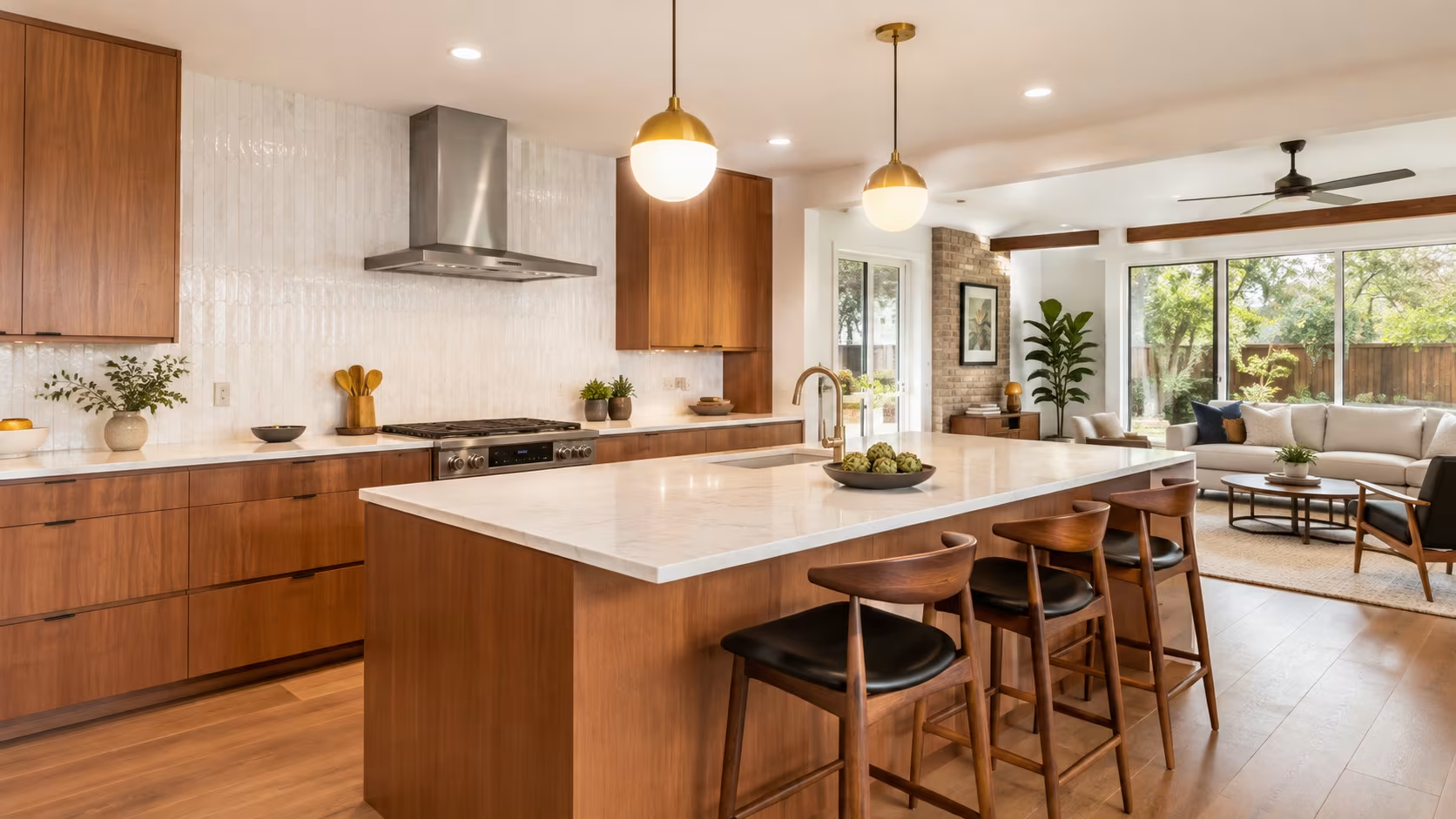
Original kitchens in 1960s–1980s Richardson homes were typically small, galley-style layouts with limited counter space. A kitchen remodel that expands into adjacent square footage, adds an island, upgrades to quartz or granite countertops, installs under-cabinet lighting, and replaces appliances with energy-efficient models can return 60–80% of its cost in appraised value while making the home far more livable.
Primary Bathroom Addition or Upgrade
Many older homes lack a true primary suite with an en suite bathroom. Converting an adjacent bedroom, closet, or unused space into a primary bath with a walk-in shower, double vanity, and soaking tub is one of the highest-value investments in Richardson's resale market. Older bathrooms with original tile, tub surrounds, and fixtures benefit enormously from even a moderate update.
Window Replacement
Single-pane aluminum windows common in homes built before 1990 are enormously inefficient in North Texas's climate extremes. Replacing them with double- or triple-pane low-E vinyl windows reduces heat gain in summer, reduces heat loss in winter, cuts noise, and can lower monthly utility bills by 10–20%. This is a high-ROI investment in older Richardson homes.
Hardwood Floor Restoration
Many older Richardson homes have original hardwood floors hiding under decades of carpet. Removing the carpet, refinishing the wood, and extending it with matching material in areas where it was removed is a cost-effective way to dramatically elevate the interior. Solid hardwood from the 1960s is often higher quality than what's affordable in new construction today.
Visual Appeal Renovation
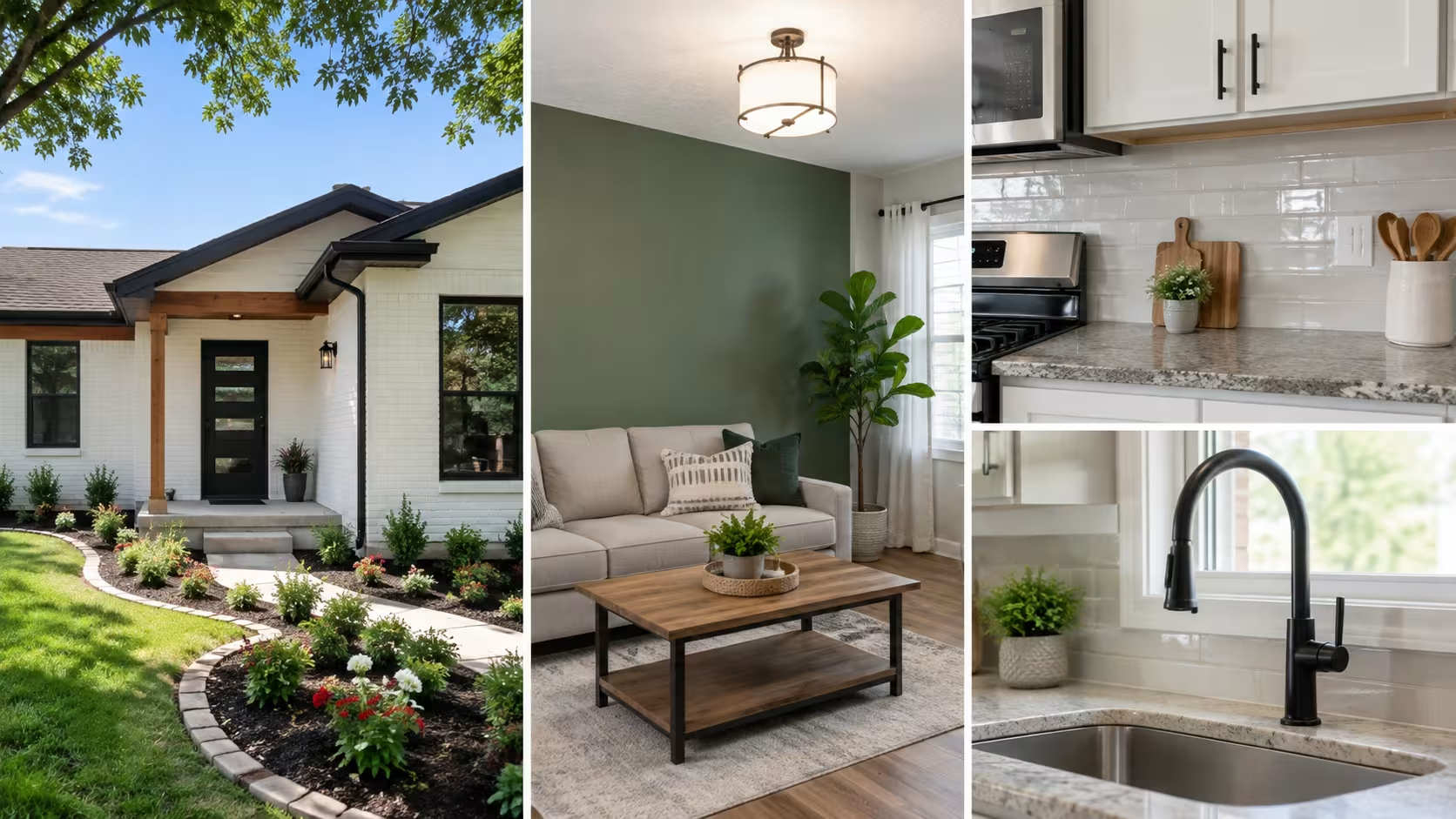
Older homes often have dated brick, original shutters, overgrown landscaping, and original garage doors that undermine their appearance. A curb appeal remodel, fresh paint or brick staining, new front door, updated garage door, refreshed landscaping, and pathway lighting, is one of the highest-ROI projects for older Richardson homes and creates an immediate visual transformation.
Attic Insulation and Air Sealing
In Texas, the attic is where you win or lose the battle against energy costs. Many older Richardson homes have minimal insulation and significant air leakage at the top plate. Adding blown-in insulation to R-38 or higher, sealing attic penetrations, and properly venting the attic can dramatically reduce cooling loads, a significant financial win over the life of your ownership.
Garage Conversion or Expansion
Some older Richardson homes have detached single-car garages or underutilized garage space. Converting a portion to a home office, gym, or in-law suite, or expanding the garage footprint, can add meaningful square footage and functionality without altering the primary living space.
What Are the Biggest Home Remodeling Mistakes to Avoid?
Remodeling mistakes are expensive, stressful, and sometimes irreversible. Here are the errors Richardson homeowners most commonly make, and how to avoid them.
Mistake #1: Underbudgeting
The single most common remodeling mistake is setting a budget that doesn't reflect reality. Many homeowners base their budget on best-case scenarios or online estimates that don't account for North Texas labor rates, current material costs, permit fees, or the almost-universal reality that unforeseen conditions (hidden mold, outdated wiring behind the walls, failing subfloor) add cost. Build in at least 15–20% contingency. If you don't use it, consider it a bonus.
Mistake #2: Hiring on Price Alone
Choosing the lowest bidder without thoroughly vetting license, insurance, references, and past work is a very expensive mistake in the long run. A contractor who charges less often cuts corners in ways that aren't visible until years later, substandard flashing, improper waterproofing, wiring that doesn't meet code. In Richardson's remodeling market, quality contractors are in high demand. The lowest bid is almost never the best value.
Mistake #3: Skipping the Permit
Permits exist to protect homeowners, not just to generate revenue for the city. An unpermitted addition, electrical upgrade, or structural change can void your homeowner's insurance, create title problems when you sell, and put your family at risk. The City of Richardson enforces its permitting requirements, and buyers' home inspectors routinely flag unpermitted work.
Mistake #4: Changing Plans During Construction
Every change order during construction costs more than if the same decision had been made during the design phase. Changing countertop materials mid-project, deciding to add a window after framing is complete, or expanding the scope after demolition has already happened adds cost, time, and friction. Make your decisions before construction begins and stick to them.
Mistake #5: Ignoring the Neighborhood
Over-improving a home beyond the neighborhood's ceiling can mean spending money you'll never recoup. If the most expensive homes on your block sell for $450,000, investing $200,000 in remodeling a home you paid $300,000 for is unlikely to generate a positive return. Research comparable sales in your specific Richardson neighborhood before determining your remodeling budget.
Mistake #6: Focusing Only on Aesthetics
It's tempting to spend the remodeling budget on what's visible, new tile, new cabinets, new lighting, while ignoring unsexy but critical systems like HVAC, electrical, plumbing, and insulation. In an older home, modernizing the mechanical infrastructure often delivers more value, in safety, comfort, and long-term costs, than purely cosmetic updates.
Mistake #7: Not Having a Detailed Contract
As discussed earlier in this guide, a vague contract is an invitation to disputes, incomplete work, and unexpected costs. Never start a project without a contract that specifies scope, materials, timeline, payment schedule, and change order procedures.
Mistake #8: Underestimating the Timeline
Remodels almost always take longer than anticipated. Supply chain delays, subcontractor scheduling, inspection hold times, and weather-related delays (North Texas gets its share of severe weather) all affect the timeline. If a contractor promises an unrealistically fast completion, be skeptical, and plan your own life accordingly.
What Are the Most Common Problems Found During Home Remodeling?
When walls come down and floors come up, the hidden history of a home is revealed. In Richardson, where a significant portion of the housing stock dates from the 1960s through the 1980s, certain problems appear with remarkable frequency.
Outdated Electrical Systems
Homes built in Richardson before the mid-1980s may have aluminum wiring, knob-and-tube wiring, or undersized electrical panels. Aluminum branch circuit wiring, in particular, is a known fire hazard when not properly managed. Remodels that open up walls often reveal these conditions, requiring a licensed electrician to upgrade the wiring before proceeding. This is not optional, it's a code and safety requirement.
Galvanized Steel Plumbing
Original galvanized steel water supply pipes in homes built before the 1970s corrode from the inside over time, gradually reducing water pressure and eventually leading to leaks. When a remodel reveals galvanized pipes, the smart move is to repipe the affected runs, or the whole house if the pipe is pervasive, with copper or PEX while the walls are already open.
Asbestos-Containing Materials
Homes built before 1980 may contain asbestos in floor tiles (particularly 9x9 vinyl tiles), pipe insulation, popcorn ceiling texture, joint compound, and exterior siding. Asbestos is not hazardous when it's undisturbed, but demolition disturbs it. If your Richardson home was built before 1980, an asbestos survey by a licensed professional before demolition begins is strongly recommended. Texas has specific regulations governing asbestos abatement.
Lead Paint
Federal regulations require contractors working on homes built before 1978 to follow EPA Lead Renovation, Repair, and Painting (RRP) rules. Lead paint is common in Richardson's older neighborhoods. If your contractor is not RRP-certified and your home was built before 1978, that's a compliance and health issue that should be addressed before work begins.
Subfloor Damage
When flooring is removed, particularly around bathrooms, kitchens, and exterior walls, subfloor damage from water intrusion, rot, or termite activity is frequently discovered. Richardson's humidity and the prevalence of clay soil (which encourages foundation movement and can crack slab penetrations) contribute to moisture-related subfloor deterioration. Replacing damaged subfloor adds cost but is non-negotiable.
Inadequate Insulation
Older Richardson homes were often built with insulation standards that were considered adequate at the time but are wholly insufficient by today's benchmarks. When walls are opened, discovering fiberglass batts compressed into 2x4 stud bays, or no insulation at all, is common. This is an opportunity to upgrade, particularly in exterior walls.
HVAC Ductwork Problems
Many older homes in Richardson have ductwork that was installed decades ago and may be disconnected, deteriorated, improperly sized, or located in unconditioned attic space with minimal insulation around it. Remodels that affect ceilings or walls often reveal ductwork issues that, if left unaddressed, undermine the performance of even a brand-new HVAC system.
Foundation and Structural Issues
The expansive clay soils in the DFW area can cause significant foundation movement over time. Remodels that open up walls sometimes reveal cracked studs, improperly repaired prior damage, or evidence of structural movement that was concealed by previous finishes. Any structural concerns should be reviewed by a licensed structural engineer before continuing.
How Can You Find a Reliable Remodeling Contractor in Richardson, TX?
Choosing the right contractor is the most consequential decision in your entire remodeling project. The right contractor will deliver quality work on time and within budget. The wrong one will cost you money, time, and significant stress.
Here's a systematic approach to making this decision well.
Start With Licensing Verification
In Texas, general contractors are not universally required to hold a state license, but specific trades are, including electricians, plumbers, HVAC technicians, and roofing contractors. Verify trade-specific licenses through TDLR at tdlr.texas.gov. For general contractors, focus on insurance, references, and BBB standing as your primary screens.
Require Proof of Insurance
Before any contractor sets foot on your property, obtain certificates of insurance showing general liability coverage (minimum $1 million per occurrence is standard) and workers' compensation insurance. Call the insurance carrier to verify the policy is active, certificates can be forged or represent lapsed policies.
Get at Least Three Itemized Bids
Always collect at least three bids for any significant project. Require each bid to be itemized, line items for labor, materials, subcontractors, and profit margin, not just a lump sum. Itemized bids allow you to compare apples to apples and immediately reveal when one contractor is planning to use cheaper materials.
Check References Diligently
Ask for references from at least three recent projects of similar scope. Call every reference. Ask specific questions: Was the project completed on time? On budget? How were change orders handled? Were there any disputes? Would you hire this contractor again? A contractor who cannot provide references or who is reluctant to share them should not be on your shortlist.
Visit a Current Job Site
Ask to visit a project the contractor is currently working on. A professional contractor will have a reasonably organized, clean, and safe job site. Haphazard storage of materials, absence of proper safety measures, and a disorganized workspace suggest the same approach will come to your home.
Evaluate Communication Style
Your contractor will be your primary partner for weeks or months. Pay attention to how responsive and clear they are during the bidding process. Contractors who take days to return calls, provide vague answers, or seem irritated by detailed questions during the proposal phase will not improve once you've signed the contract.
Understand the Subcontractor Structure
Many general contractors in Richardson subcontract electrical, plumbing, HVAC, and other specialty work. Ask who the subcontractors are and whether they are licensed and insured. You have the right to know who will be working in your home.
Don't Pay Cash or Skip Receipts
All payments should be made by check or ACH transfer, not cash. Cash transactions make disputes nearly impossible to resolve and may indicate that a contractor is operating off the books. Always obtain receipts for every payment.
Trust Your Instincts
After verification, references, and job site visits, you'll have developed a strong sense of each contractor. Trust that sense. The relationship between a homeowner and a contractor requires mutual respect and clear communication. If something feels off, even if you can't articulate exactly why, that instinct is often correct.
Why Choose Splash Home Remodeling for Your Home Remodeling Project in Richardson, TX?
Splash Home Remodeling brings experience, creativity, and dependable craftsmanship to every home remodeling project in Richardson, TX. Whether you are updating a kitchen, renovating a bathroom, or planning a complete home transformation, the team focuses on delivering designs that match your lifestyle, budget, and long-term goals. Every project is handled with careful planning, quality materials, and attention to detail to create beautiful and functional living spaces.
Homeowners in Richardson, TX choose Splash Home Remodeling because of the company’s commitment to clear communication, timely project completion, and customer satisfaction. From the first consultation to the final walkthrough, the remodeling process is designed to be smooth and stress-free. The team works closely with homeowners to ensure every detail reflects their vision while improving comfort, style, and property value.
FAQS
Should I remodel my home before listing it for sale in Richardson?
Yes, selectively. Not every remodel makes financial sense before a sale. Strategic pre-sale updates can meaningfully improve your sale price and time on market in Richardson. Major structural remodels rarely recoup full cost at resale, so focus on high-visibility, lower-cost updates that appeal broadly to buyers.
Can I remodel my home in phases?
Yes, many homeowners complete remodeling projects in phases to better manage costs and minimize disruption. Kitchens, bathrooms, and living areas are often remodeled separately over time.
Can remodeling help modernize an older home?
Yes, remodeling can update outdated features, improve energy efficiency, enhance safety, and create a more modern appearance while preserving the home’s character.
Can smart home technology be included in remodeling?
Yes, many homeowners add smart lighting, thermostats, security systems, automated blinds, and energy-efficient technology during remodeling projects.
How Does Splash Home Remodeling Manage Remodeling Timelines and Budgets?
Splash Home Remodeling uses detailed planning, clear communication, organized scheduling, and efficient project management to keep remodeling projects on track.
Every successful renovation begins with a vision and ends with a space designed for better living.
Richardson, TX Remodeling Specialists
Posted in
Blogs



Related Posts

Prev
Next
This website uses cookies to ensure you get the best experience on our website.
Need Help?
Planning a renovation project? We’re here to help with expert remodeling solutions and personalized support.
Essentials
Quick Links
Address:
2435 N Central Expy, STE. 1280, Richardson, TX 75080
Phone
214-980-2669
Copyrights© 2026 Splash Home Remodeling . All rights reserved.
×
 Call Now